Research
The AIMM Lab studies emotion across multiple levels, from brain networks and biological processes to everyday behavior and computational models. We combine affective neuroscience, multimodal neuroimaging, biological measures, and computational modeling to understand how emotion is generated and regulated, why these processes differ across individuals, and how they contribute to mental health.
Our research is guided by several broad questions:
- How do brain networks and temporal dynamics support the generation and regulation of emotion?
- How do bioenergetic and physical health shape emotion regulation and mental health?
- How do people decide whether and how to regulate their emotions in everyday life, and how do they select among different regulation strategies?
- Can brain- and body-based interventions improve emotion regulation and emotional well-being?
- What can comparisons between humans and AI teach us about the computational principles of emotion processing and regulation?
Building on these questions, our research program is organized around the following directions.
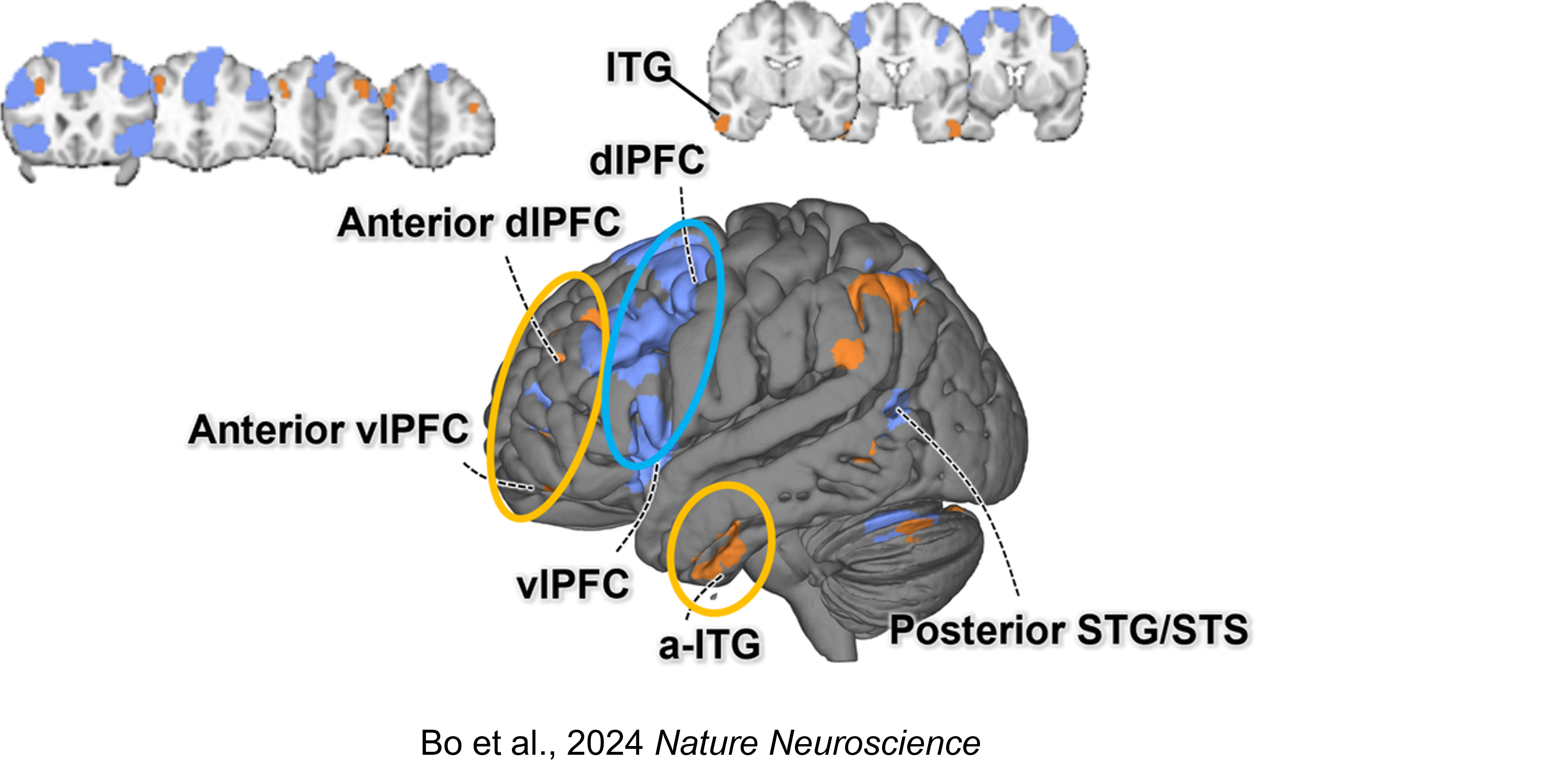
Brain networks underlying emotion regulation
Emotion regulation allows us to modify how we experience and respond to emotional events, and it is an important part of adaptive behavior and mental health. Rather than relying on a single brain region, emotion regulation emerges from coordinated activity across large-scale brain networks.
We use computational neuroimaging to characterize how these distributed brain systems work together to generate and regulate emotion. We are particularly interested in how emotion-regulation networks differ across individuals, how they vary with people’s preferred regulation strategies, and how repeated use of different strategies may shape these brain systems over time.
Bioenergetic health, emotion regulation, and mental health
The brain is one of the body's most energy-demanding organs, and neural activity depends heavily on mitochondria to generate the energy needed to support brain function. Mitochondrial health is therefore a fundamental component of bioenergetic health and may shape how effectively the brain responds to cognitive and emotional demands.
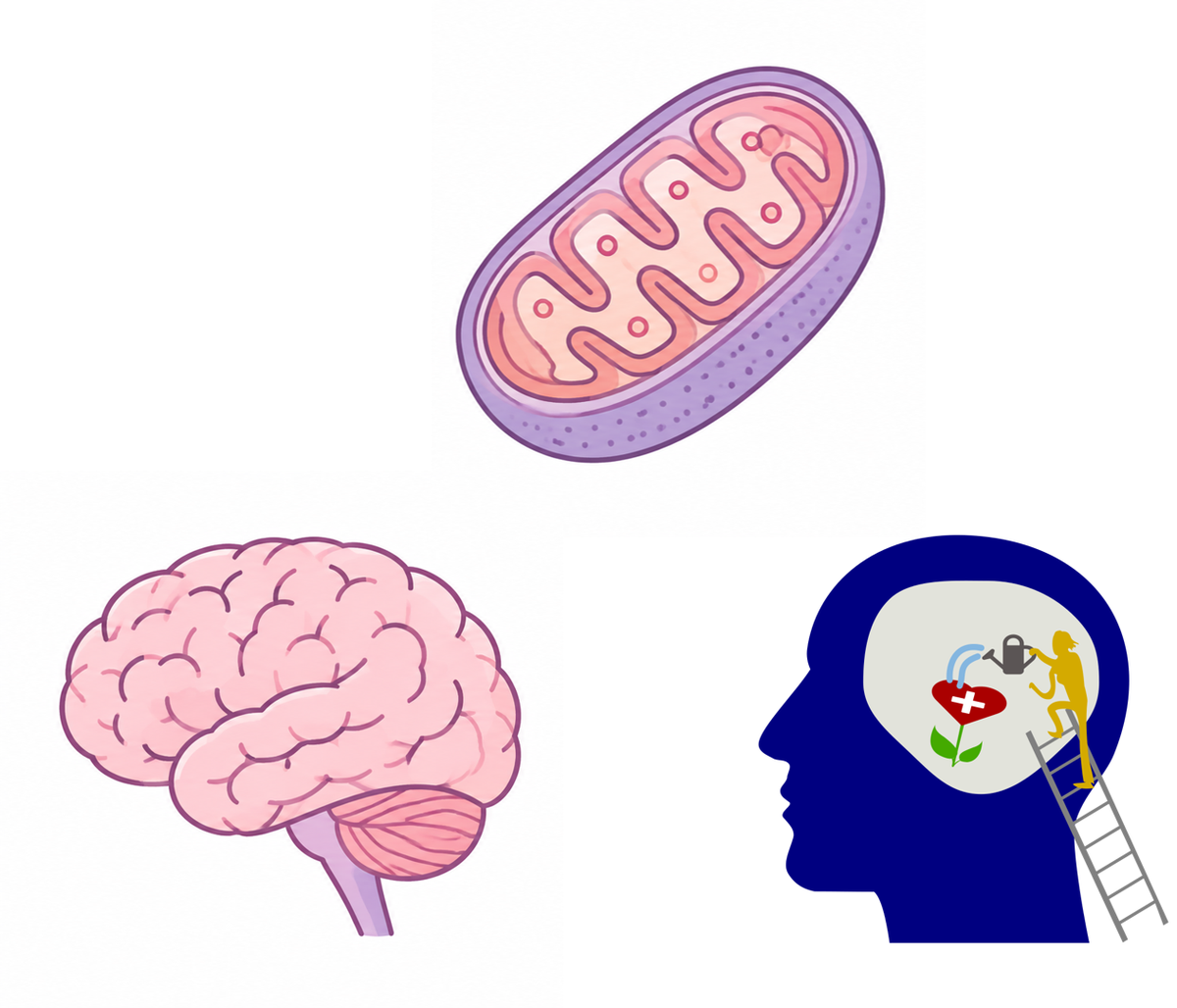
Emotion regulation is a core process supporting mental health. It relies on coordinated activity across large-scale brain networks and engages cognitively demanding neural systems that require substantial energy. This raises the possibility that emotion regulation may be particularly sensitive to differences in bioenergetic health, and that it may serve as an important pathway linking the body’s energetic state to emotional well-being and mental health.
Using fMRI, EEG, computational neuroimaging, and biomarkers of bioenergetic health, we examine how mitochondrial function, aging, fatigue, and clinical symptoms influence emotion-regulation networks and mental health.
Computational neuroimaging of naturalistic emotion regulation
Much of what we know about emotion regulation comes from laboratory studies in which participants are instructed to use a specific strategy, such as reappraisal, in response to emotional stimuli. These paradigms have been essential for identifying the brain systems involved in emotion regulation, but everyday emotion regulation is often much less structured. In real life, people must first decide whether to regulate, which strategy to use, and when to change or stop that strategy.
We aim to develop more naturalistic experimental paradigms and computational neuroimaging approaches to study these processes as they unfold. We ask how people make emotion-regulation decisions, what brain systems support these choices and their implementation, and how biological and psychological factors shape regulation behavior in everyday contexts.
Brain–body interventions for emotional well-being
Understanding the mechanisms of emotion regulation can also help identify new ways to improve emotional well-being and mental health. If specific brain networks and biological processes contribute to more adaptive emotion regulation, they may provide targets for intervention.
We aim to translate our mechanistic findings into brain- and body-based approaches that support healthier emotional functioning. On the brain side, we are interested in identifying precise neural targets for interventions such as neurofeedback and brain stimulation. On the body side, we aim to test whether metabolic, lifestyle, and behavioral interventions can improve bioenergetic health and, in turn, support brain function and emotion regulation.
Ultimately, this work seeks to understand not only how brain and body systems shape emotional health, but also whether these systems can be modified to promote resilience and well-being.
Human and AI models of emotion regulation
Recent advances in artificial intelligence have produced models that can recognize emotional content, reason about emotional situations, and generate responses that resemble human emotion-regulation strategies. Yet these abilities emerge from computational systems that are fundamentally different from the biological mechanisms supporting human emotion.
We are interested in using AI models as a new computational framework for studying emotion regulation. We ask how AI models represent emotional information, how they generate different regulation strategies, and where their responses converge with or diverge from human behavior and brain processes. By comparing humans and AI, we hope to better understand which aspects of emotion regulation reflect general computational principles and which depend on the unique biological and experiential characteristics of the human brain.